
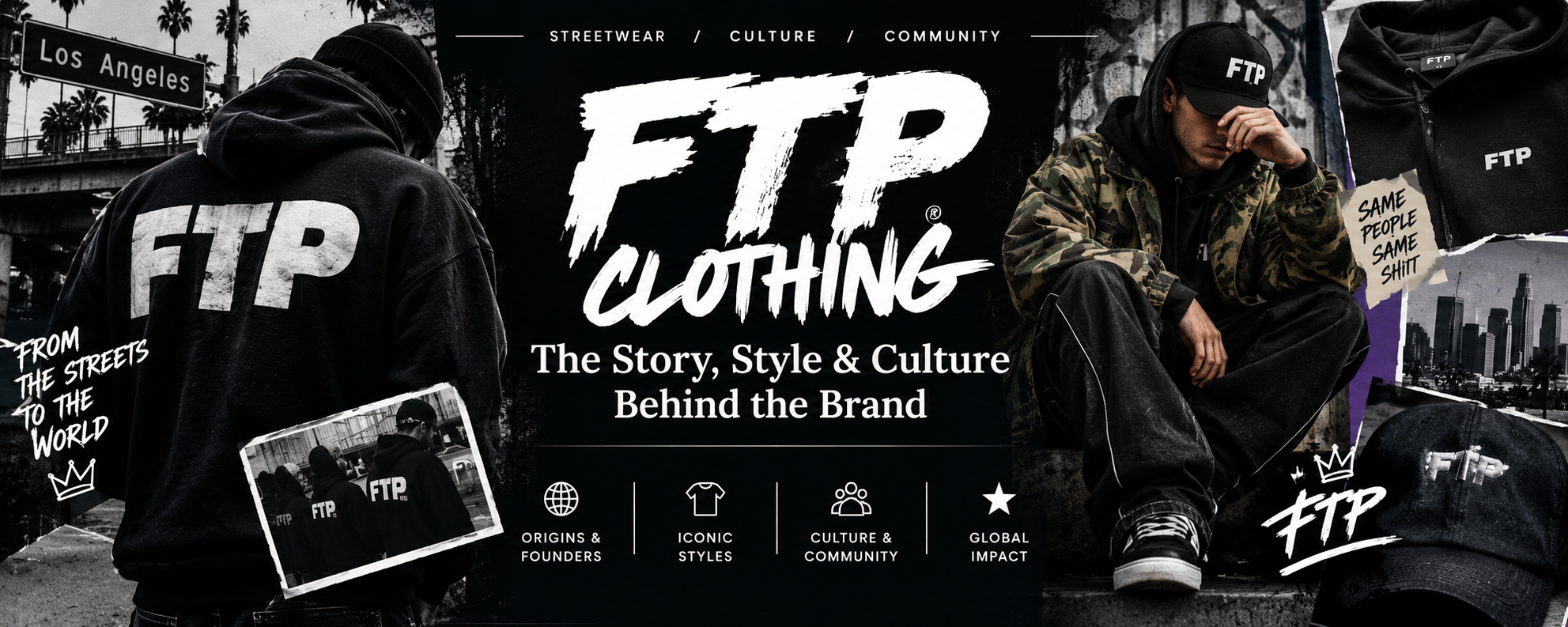
FTP Clothing has become a recognizable name within the underground side of American streetwear. Known for its bold graphics, distinctive visual language, and connection to music and youth culture, FTP has developed an identity that feels different from traditional fashion labels. Rather than following conventional fashion formulas, the brand has built attention around graphic-driven apparel, limited releases, and a strong independent attitude. For people researching modern streetwear, understanding FTP means looking beyond individual garments and exploring the culture, design approach, and community that helped shape the brand.
What Is FTP Clothing?
FTP, commonly associated with the name FuckThePopulation, is an independent streetwear label founded by Zac Clark. The brand developed in Los Angeles and became connected with underground street culture, music, and graphic-focused fashion. Its designs often use strong imagery and direct messaging, giving the clothing a recognizable identity within the wider streetwear scene.
Unlike conventional fashion brands that may focus heavily on seasonal trends, FTP has historically emphasized a more independent approach. Its clothing can include hoodies, shirts, jackets, pants, accessories, and other casual streetwear pieces. This broad product range allows the brand to communicate its visual identity across different types of apparel.
The FTP brand is particularly interesting because its popularity is closely connected to the culture surrounding it. Its history demonstrates how an independent label can build recognition through community, creative identity, and cultural connections rather than relying only on traditional fashion marketing.
The Origins and Evolution of the FTP Brand
FTP’s story is closely associated with founder Zac Clark and the Los Angeles streetwear environment. The label began as a small independent project and gradually developed a following among people interested in underground fashion and music culture.
The exact founding date is sometimes reported differently across online sources, but Grailed identifies FTP as dating back to 2010. Over time, the brand expanded from graphic T-shirts into a wider range of apparel and accessories. Its growth also involved collaborations and connections with artists and cultural figures, helping FTP reach audiences beyond its original community.
One important part of the brand’s development has been its consistency. While individual collections can change in graphics, colors, and garment types, the overall identity remains recognizable. This combination of independent origins and a consistent visual direction has helped FTP maintain a distinct position within American streetwear.
What Makes FTP Clothing Different From Mainstream Streetwear?
A major difference between FTP Clothing and more conventional fashion is its emphasis on graphic communication. Instead of treating graphics as simple decoration, the brand frequently uses them as a central part of its identity.
Its visual style can be associated with bold typography, provocative imagery, dark themes, and underground cultural references. These characteristics make the garments visually noticeable and contribute to the brand’s recognizable aesthetic.
FTP also fits into a larger movement in American streetwear where clothing represents more than fashion. A graphic hoodie or shirt can communicate interests, music preferences, cultural associations, or an individual’s approach to style.
It is useful to view FTP alongside other names that have influenced U.S. streetwear, including Supreme, Stüssy, FUCT, Palace, and Fear of God. Each has developed its own design language and relationship with street culture, but FTP is particularly associated with the independent and confrontational side of graphic streetwear.
Exploring the Main Categories of FTP Clothing
One of the easiest ways to understand FTP’s design language is by looking at its major clothing categories.
FTP hoodie styles are especially relevant to modern streetwear because hoodies provide a large surface for graphics and work naturally with relaxed, layered outfits. A hoodie can be worn with jeans, cargo pants, or other casual trousers, making it a practical part of everyday streetwear.
You can explore the site’s FTP hoodie category to see how this type of garment fits within the broader FTP clothing range.
The term FTP hoodies can cover different graphic treatments, fits, colors, and construction details. From a style perspective, hoodies are important because they combine comfort with visual expression, two qualities that have become central to contemporary streetwear.
For outerwear, an FTP Jacket can add another layer to a streetwear outfit. Jackets are particularly useful during cooler seasons and can be combined with hoodies or graphic shirts to create layered looks.
Shirts represent another important part of graphic streetwear. An FTP shirt can function as a simple standalone piece or as a foundation underneath a jacket or hoodie. Graphic shirts are also useful for understanding how streetwear brands use visual design to communicate identity.
Understanding the FTP Streetwear Aesthetic
The FTP aesthetic is strongly connected to individuality and graphic expression. Bold artwork, recognizable branding, relaxed silhouettes, and darker visual themes are recurring characteristics associated with the label.
The appeal of this approach is not necessarily about following one specific outfit formula. Instead, FTP clothing can be incorporated into different personal styles. Someone might pair a graphic shirt with straight-leg denim, while another person may build a layered outfit around a hoodie and jacket.
This flexibility is one reason graphic streetwear continues to have a strong presence in American fashion. The clothing becomes a starting point for personal styling rather than a complete uniform.
The FTP brand also demonstrates how independent streetwear can develop a recognizable identity through consistent graphics and cultural associations.
FTP Clothing and U.S. Streetwear Culture
FTP’s place in U.S. streetwear is connected to the relationship between fashion, music, art, and online communities. Independent streetwear brands can gain visibility through artists, social media, collaborations, and word-of-mouth rather than depending entirely on traditional advertising.
FTP’s association with underground culture has contributed to its recognition among streetwear audiences. Its graphic-heavy designs and independent background reflect a broader movement in American fashion where smaller labels can build communities around distinctive ideas.
This cultural context is important when researching FTP Clothing. The brand is not simply a collection of hoodies, shirts, and jackets. Its history is also an example of how streetwear developed from niche subcultures into an influential part of modern American fashion.
Frequently Asked Questions About FTP Clothing
What does FTP Clothing mean?
FTP commonly refers to FuckThePopulation, an independent streetwear label associated with founder Zac Clark. The brand is recognized for graphic-focused designs and underground streetwear influences.
What is the FTP brand known for?
The FTP brand is known for bold graphics, provocative visual themes, limited releases, and connections with underground music and streetwear culture.
When did FTP Clothing start?
Sources differ on the exact founding date, but Grailed identifies FTP as dating back to 2010. The label subsequently developed from a small independent project into a recognizable streetwear name.
What types of FTP clothing are available?
FTP has been associated with several categories, including hoodies, shirts, jackets, T-shirts, pants, accessories, and other casual streetwear garments.
Why are FTP hoodies popular in streetwear?
Hoodies combine comfort, layering versatility, and a large canvas for graphic designs. These qualities make them a natural part of contemporary streetwear.
How can FTP clothing be styled?
FTP pieces can be combined with everyday streetwear staples such as relaxed jeans, cargo pants, sneakers, graphic tees, and layered jackets. The best approach depends on the wearer’s preferred fit, proportions, and overall aesthetic.